I used both radicale and baikal. Both work great. Both support CalDAV and CardDAV, to sync with them you need thr davx5 app on android. I ended up going with radicale because it supports proxy authentication and I can use it with Authelia
- 0 Posts
- 27 Comments
Joined 2 years ago
Cake day: August 8th, 2023
You are not logged in. If you use a Fediverse account that is able to follow users, you can follow this user.

 2·1 month ago
Second this. Works really well in a stable distro like Proxmox. Unfortunately however the community is only on discord. With some other patches linked there you can also use the gpu both on the host and split in vGPUs for virtual machines at the same time. I used it for some time on Arch Linux host + Win10 VM for CAD. Worked fine, but frequent arch updates borked everything often. On proxmox I never had such problems.
I currently run a ThinkPad Yoga L13 Yoga G4. Works wonders with EndeavourOS+KDE Plasma. I study engineering and I both take notes with Xournal++ and the integrated pen (other wacom compatible pens work too) and run heavy workloads like code compiling and a crap ton of MATLAB. There are some quirks specific to Linux, for example acpi does not recognize when the device is folded into tablet mode (but on Windows it works). I worked around it with two widgets with which I manually turn the tablet mode on and off. Other stuff also, I wrote a blog post on it if anyone is interested.
For all my bachelor I used a ThinkPad Yoga 370, but the dual core processor couldn’t really hold up to my computation workloads. Everything worked out of the box, always Arch Linux and I tried both Gnome and Plasma in my time with it.

 3·10 months ago
What trackers are you using for kids shows? I’m having the same problem with older cartoons I want to archive but cannot be found in my native language
I think xournal++ has a journal background to handwrite music
 6·11 months ago
That’s so cool, I almost forgot this game had a PC version. I uses to play it a lot as a kid, but I only 109%'ed it a coupleof years ago on the Wii. I guess it runs using Proton?
 21·1 year ago
Why not both
Not one in particular, just the first thing that came to mind since I use it a lot on linux. I even use NewPipe on android, didn’t even remember it had an option to download
yt-dlpinside termux?
Baikal works wonders
I second this
I did that some time ago. I just put the letter in an envelope, with just the receiver address on it, went to my local post office, paid for the service and the stamps, left them the letter and I was done.
Ah, good old PlarformIO

Also depending on the architecture on the computer, this might be the only possible solution. I have a samsung m2020 series printer connected to a Pi to share it on the local network. Samsung Unified Driver does not work on armhf as it is only compiled for x86/x64, but splix can be compiled on armhf and it actually supports my printer
Others are saying to switch to the specific driver for your printer. If you do not want to go proprietary you could try and see if your printer is supported by the splix driver
What did you do to keep the card cool?
Poorly. Had 3d printer a fan duct and ducted a fan to the back of the case, to push-pull air. Those cards are made to work in server racks, with really high pressure and high speed fans, not really for a desktop. I have seen people on reddit mounting a modified 3070ti cooler on the tesla, but I had not had a chanve to try that.
And was it loud?
Yes, depending on the fans used. But high speed fans are generally loud. Also lots of vibrations, but that qas mostly fault of my incredibly sketchy setup
I used to do this with a nvidia tesla m40 and a radeon hd6850. Used the tesla for rendering amd encoding, the radeon for display output. I just followed the arch wiki pages related to nvidia optimus laptops and PRIME offloading. It worked but was a bit junk, in some other tests I did, when the radeon was used to render the DE, I had a much more fluid experience, offloading the rendering seems to lead to some micro stutters every now and then that make it a not so fluid experience. But ymmv I guess. Also I haven’t had any luck with two separate nvidia cards, but that was probably due to driver version mismatch between the two cards
 16·2 years ago
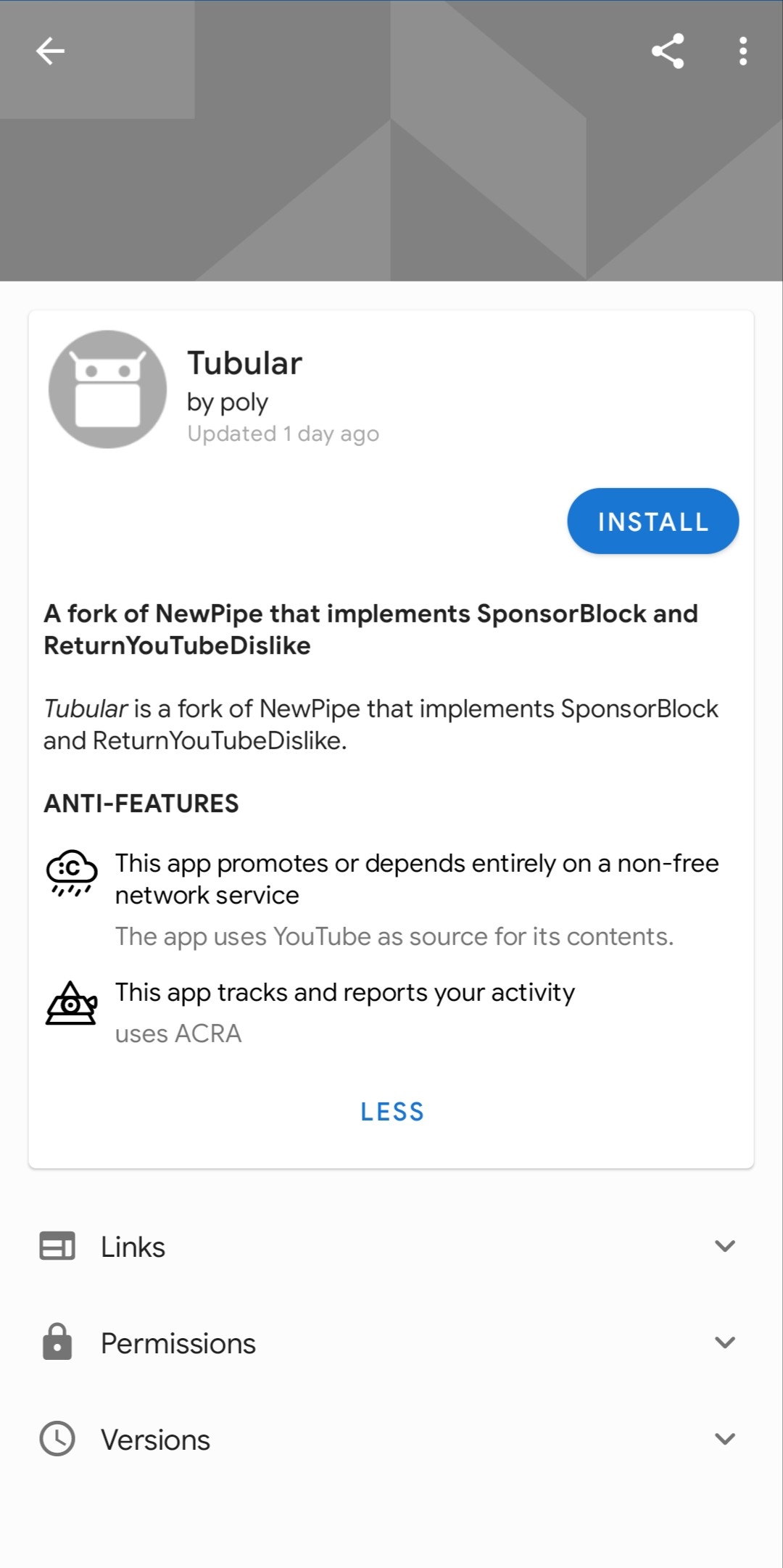
What’s up with the in-app tracking? Is it just related to likes/dislikes?
The documentation says what settings you need to enable for it to work. It also says that it takes the remote user in the X-Remote-User header. I use Authelia and it puts the remote user in the Remote-User instead, so i added a middleware to traefik that renames the header to the one expected by radicale. The only problem remaining is that radicale presents the auth page anyway, and you have to login with the same username as the auth header but with any password